poolsandpastures
Thoughts on the Gospel, Life, and Ministry
Why We Love the Apostles’ Creed

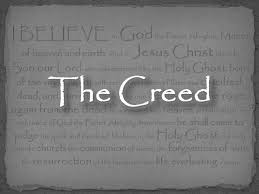 During our recital of the Apostles’ Creed in Sunday’s worship service, I heard a young woman’s distinguished voice over the rest of the congregation. I thought to myself, “Man, she really believes this creed.” When I spoke to her after the service, I said, “I love the conviction and passion in your voice when you say the Creed. I heard you above everyone else.” Her response was golden; she said, “I love the Creed. I love to say it! It means so much to me.”
I’m with her. I love the Creed. And, I love to join along with my fellow worshippers saying it each week. The Creed holds a special place in my heart, and the hearts of many others, because it ties us together as the people of God and reminds us of the faith that is ours in Christ Jesus. I remember how, as a child, reciting the Creed Sunday after Sunday with men and women, young and old, was an encouragement to my faith. These brothers and sisters – fathers and mothers – shared the faith that I had in the Lord Jesus Christ. What a great reminder that we are the family of God and equals in Christ!
The Creed also helps remind us each week of just what it is that we believe as orthodox Christians. It is a basic summary of the things – things like: God is Trinity; Jesus is fully divine and fully human; the resurrection from the dead; the forgiveness of sins – that every Christian should believe. In addition, the Creed enables us to proclaim to visitors what we believe as a congregation. Chester ARP Church is an Apostles’ Creed congregation.
I pray you love the Creed too. May the Lord bless you and keep you in his grace.
In Christ,
Clint
Give Thanks in Everything — Thanksgiving 2014
 I haven’t written in a while, but since Thanksgiving is tomorrow, I thought I would write a brief piece on the importance of “giving thanks in all circumstances.” The majority of this piece originally appeared our congregation’s November 2014 newsletter.
It won’t be long until we are sitting around a table with our family and friends eating our fill of turkey and pie, swapping stories, and enjoying the company of others. And, we’ll be thankful — thankful for all kinds of things, for the blessings we experience, for everything in our lives.
It’s easy to be thankful for those good things in life, isn’t it? It’s easy to be thankful for the smell of children’s freshly washed hair, for the beauty of the fall foliage, for the love of family and friends, for the memories of loved ones who’ve gone to their heavenly home, and for the many other blessings we experience each and every day. But, it’s not so easy to be thankful for the difficult things, the sad things, the challenging things.
Paul says, though, that we are to “give thanks in all circumstances,” for it is the “will of God in Christ Jesus for you” (1 Thess. 5:18). That’s a pretty powerful and convicting statement! It is the will of God for us to be thankful in all circumstances — good and bad. Why is this so? The answer is simple. First, giving thanks is a recognition that our God is a good God regardless of whether or not we consider certain circumstances and things in our lives to be a burden or a blessing. And second, giving thanks expresses our unwavering trust in Him and his perfect plan for all things to bring about his glory and our good. His glory and our good is not dependent upon our understanding, but on his goodness.
So, let me encourage you to fulfill the will of God by being thankful for all a things this Thanksgiving season. Be thankful for all the usual good things — faith, family, God’s word, and creation. But also, be thankful for the difficult things in life — daily problems, sufferings, and inadequacies. It is these difficult things that remind us of our need for a Savior and of our dependence upon him.
The Bible Is Mankind’s Book

I recently read an essay by B.B. Warfield, a 19th century Princeton theologian, in which he made the claim that Christianity is the chief among the world’s religions. The reason for this, he said, was that Christianity has the Bible – “the book of the ancient world, the book of the Middle Ages, and…the book of these new days of ours.” He further wrote that the Bible is “mankind’s book. Other books may belong the a people, an age, a stage of human development: this book (the Bible) belongs to all peoples, all ages and all stages of growth, whether of the individual or of the race – unifying them all and welding them into one vitalized and vitalizing whole.”
Now, I know this is not the most popular claim in today’s society, which celebrates religious pluralism, a relativistic view of truth, and the ever-changing value system of tolerance. But, think about it for a minute. Where else can you find the answers to life’s big questions – Who am I? Where did I come from? What is my purpose? What is wrong with the world? How does the world get fixed? And, what will ultimately happen to me when I die? – answered in a succinct and hope-filled way? Nowhere. And, what other religious book has the rich, storied, and reliable history of the Bible? None. The Bible we have today is the same as the one that the Jews read before Jesus’ birth, the same as the one Jesus read, and the same as the one that Christians have read throughout history. It has, therefore, shaped the lives of countless men, women, congregations and societies. No other “holy” book can make that claim. The Bible is the book of books.
As Christians, we posses the word of God in the Bible, and I want to encourage you to take full advantage of it. It is the story of God. It is your story. Therefore, read, study, learn, memorize, and thank God for it. May God bless you as he instills his truth in your heart and draws you closer to him as you read and study the book of books.
The NT365 Experiment: Romans 9-10
After a week away and reading through some difficult texts, I’m glad to be back writing. I must say, though, that the text is no less difficult. For me, Romans 9-11 are perhaps the three hardest collection of chapters to understand in the whole Bible. They just don’t sit well with me intellectually, emotionally, or pastorally. They’re hard. But, they’re exceedingly important because (if I understand Paul right, and that’s a big if) God’s faithful fulfillment of his promises to the Gentiles rests on his faithful fulfillment of his promises to Israel.
The ESV Study Bible comments in its explanatory notes on 9:1-11:36,
“Paul has made it clear that God’s saving promises have been fulfilled for the Gentiles. Indeed, the church of Jesus Christ now enjoys the spiritual blessings promised to Israel: the gift of the Spirit (8:9); adoption as God’s children (8:14-17); future glory (8:17,30); election (8:33); and the promise of never being severed from God’s love (8:35-39). Paul now asks in chs. 9-11 whether the promise of God made to ethnic Israel will be fulfilled. If his promises to the Jews remain unfulfilled, how can Gentile Christians be sure that he will fulfill the great promises that conclude ch. 8?”
So, our hope in the salvation of God provides in the gospel through faith rests upon God’s faithfulness to fulfill ALL of his promises, not just those to he made to the Gentiles . He is a great and faithful God who will fulfill all his promises of salvation, and he will fulfill them in the same way — through the finished work of Christ, gospel proclamation, and a faithful response to his grace. Notice the following three sets of verses.
- The finished work of Christ and his righteousness — “For, being ignorant of the righteousness of God, and seeking to establish their (Jews) own, they did not submit to God’s righteousness. For Christ is the end of the law for righteousness to everyone who believes.” (Romans 10:3-4)
- Gospel Proclamation — “How are they to call on him in whom they have not believed? And how are they to believe in him of whom they have never heard? And how are they to hear without someone preaching? And how are they to preach unless they are sent?…So, faith comes from hearing, and hearing through the word of Christ.” (Romans 10:14-17)
- Faithful response to his grace — “…if you confess with your mouth that Jesus is Lord and believe in your heart that God raised him from the dead, you will be saved. For with the heart one believes and is justified, and with the mouth one confesses and is saved. For the Scripture says, ‘Everyone who believes in him will not be put to shame.’ For there is no distinction between Jew and Greek: for the same Lord is Lord of all, bestowing riches on all who call on him. For everyone who calls on the name of the Lord will be saved.” (Romans 10:9-13).
May the Lord bless you as you read (and reread) Romans 9-10. Its tough, but it’s good. Don’t lose heart.
The NT365 Experiment: Romans 3
What is there to say about Romans 3 that Paul has not already said? I could attempt to explain the chapter in 500-600 words, or I could simply quote the most glorious passage of all Paul’s Epistles and let him speak for himself. I think that’s what I’ll do.
Romans 3:21-31 (ESV)
“But now the righteousness of God has been manifested apart from the law, although the Law and the Prophets bear witness to it—the righteousness of God through faith in Jesus Christ for all who believe. For there is no distinction: for all have sinned and fall short of the glory of God, and are justified by his grace as a gift, through the redemption that is in Christ Jesus, whom God put forward as a propitiation by his blood, to be received by faith. This was to show God’s righteousness, because in his divine forbearance he had passed over former sins. It was to show his righteousness at the present time, so that he might be just and the justifier of the one who has faith in Jesus.
Then what becomes of our boasting? It is excluded. By what kind of law? By a law of works? No, but by the law of faith. For we hold that one is justified by faith apart from works of the law. Or is God the God of Jews only? Is he not the God of Gentiles also? Yes, of Gentiles also, since God is one—who will justify the circumcised by faith and the uncircumcised through faith. Do we then overthrow the law by this faith? By no means! On the contrary, we uphold the law.”
Now, What do I do?
- I respond to Jesus in faith. I am justified (made right before God) by grace through faith. So are you.
- I celebrate the finished work of Jesus and his cross. I celebrate that he has atoned for me with his blood. He has done so for you too. You should celebrate with me!
- I worship a God who is both the just and the justifier of my life as I come to him in faith. That’s an amazing truth. God is just. He also make you just. And, in doing so does not contradict himself. Worship him with me.
The NT365 Experiment: Romans 1:18-2:29
John Calvin once said, “[M]any are content to have the gospel preached, provided it does not touch them, or make them uncomfortable” (Sermons on Micah). If folks were uncomfortable with Calvin, they certainly would have been uncomfortable with Paul. Paul pulls no punches, and we cannot read Paul’s writings, especially Romans, without being touched or made uncomfortable.
As we said yesterday, Paul’s great concern in Romans is to “explain the theological realities of the Christian gospel and its implications for the living a Christ-honoring life.” And, his purpose for doing so is to see his readers come to Jesus in faith and repentance, confessing him as Lord and living a faithful life that glorifies Christ. In order to do this, we have to come to grips with our sinfulness and with our need for salvation. So, Paul begins there by explaining that “all have sinned and fallen short of the glory of God” (Romans 3:23), which I believe he does by dividing all of humanity into one of three categories: the good, the bad, and the ugly.
The Good (Romans 2:1-11)
In the beginning of chapter 2, I believe that Paul writes generally about people who consider themselves acceptable before God because their lives are characterized by relatively good moral behavior. There is no glaring sin present in their lives. They are considered by many to be good people, to be people who have a good moral compass. They’re generally accepted and held in esteem in the wider culture in which they live. And, they take great pride in their morality. But, their goodness is not good enough. God has been patient with, and kind to, them in order to lead them to repentance; however, they misunderstand this kindness and take advantage of it.
The Bad (Romans 1:18-31)
In the last half of chapter 1, Paul describes people who are simply lawless. They don’t care about God or his laws. He defines them as those who are “filled with all manner of unrighteousness, evil, covetousness, and malice” and as those who not only practice unrighteousness, but encourage others to do so as well. They suppress the truth that God that he wrote on their hearts and exchange “the glory of the immortal God for images resembling mortal men and birds and animals and creeping things.” Therefore, God gave them up to their lustful desires and immoral behaviors.
The Ugly (Romans 2:12-29)
The last group that Paul discusses is the religious. These are folks who have been given the privilege of intimately knowing the righteous requirements of God and of receiving his revelation of himself. Paul specifically addressed the Jews in the Roman congregation and their experience of circumcision. They took pride in their outward adherence to the ceremonies and stated standards of their religion; yet, they ignored the condition of their hearts before God out of which this outward adherence should flow. But, this description can be applied to many folks consider who themselves to be Christians as well.
The Uncomfortable Reality and Gracious Encouragement
Under the inspiration of the Holy Spirit, Paul has effectively placed every one of us into one of these three categories. We naturally line up with one of these three groups. And, therefore, we have all sinned and fallen short of God’s glory. But, God has the power to save those who have rebelled against him and fallen short of his glory through Jesus Christ our Lord. Be encouraged today in Jesus. Run to him, the great Savior of sinners.
The NT365 Experiment: Romans 1:1-17
What do you say about Romans in a brief format like this? Some of the greatest minds in Christian history have spent years studying and writing on the Epistle. John Murray wrote two immense volumes on it. D. Martin Lloyd-Jones wrote fourteen! And, Sinclair Ferguson once said, after preaching for eighteen months on the book, that eighteen months wasn’t nearly long enough to properly grasp its breadth and depth. Romans is a big book!
The Christian Manifesto
One biblical commentator (John Stott maybe) once called Romans the Christian manifesto. Here’s why: In Romans, Paul, more than anywhere else, explains the theological realities of the Christian gospel and its implications for the living a Christ-honoring life. Verses 1:16-17 set the stage and illustrate this point perfectly.
“For I am not ashamed of the gospel, for it is the power of God for salvation to everyone who believes, to the Jew first and also to the Greek. For in it the righteousness of God is revealed from faith for faith, as it is written, ‘The righteous shall live by faith.'”
Here, we see three theological realities and their corresponding implications for living the Christian life. I’ll briefly explain by pointing out the reality and its implication.
The Gospel is the power of salvation to everyone who believes.
We are saved by God according to his grace in his power through faith. Now, I know that is a lot to keep straight. Let me try to help you. First, God saves us by his grace. That means that we didn’t do anything to earn our salvation. God freely decided to give it to us. He was not forced to do so, nor did we merit it in anyway. It is a gift that comes to us through the gospel, which is through Jesus Christ himself. Second, it is God’s power that saves us, not our own. He is the one who gives life to the dead, who reconciles his enemies to himself. We are powerless to save ourselves (stay tuned to tomorrow to see why), but God isn’t powerless to save us. And third, we receive our salvation through faith in the Lord Jesus Christ. It is for everyone who believes because faith serves the vehicle through which God communicates and delivers his grace to us.
The Gospel not only unites God with his enemies, it also unites us with our enemies.
Christian salvation is for both the Jews and the Gentiles. These two groups of people were ethnic enemies. But, they had one thing in common: they were sinners before a holy and just God. It’s the gospel that reconciles them to Him. And, it’s the gospel that reconciles them to one another because it tears down the wall of hostility that was built because of religious reasons. If God has reconciled the Jews to himself through Jesus and the Gentiles as well, there is no need to remain separate in order to maintain cleanliness before God. They are all made clean in Christ through faith. Therefore, they are united as children of God.
Faith in the gospel leads to the living of a righteous life.
The righteous shall live by faith. All the days of their lives, they shall trust their God who has cleansed them and reconciled them unto himself and sealed them with His Spirit in the heavenly places. The faithful Christians’ righteousness before God is that of Christ which is credited to them by God through faith. And, it is expressed in a life lived in faith in the Son of God. Therefore, they shall walk in faithful obedience to him and humbly trust his grace-filled promises, not the least of which is found in Romans 8:28 — “For all things work together for the good of those who love the Lord and are called according to his purpose.”
Believe, Love, and Live
Believe the gospel today — God does love you and he sent his Son to reconcile you to himself. Receive it in faith.
Love your fellow Christians — God reconciled you to himself, but he also reconciled you to other Christians. Don’t let worldly divisions, selfish priorities, and deep wounds keep from living in fellowship with other Christians.
Live a faithful life — God saved you in faith. He empowers you to live to his glory in faith. Walk in the ways of truth today as you faithfully follow him.
The NT365 Experiment: Mark 15-16
This morning our attention is drawn to the greatest and most glorious act in all of human history — the resurrection of Jesus. After chronicling the events of Jesus’ crucifixion and burial, Mark succinctly tells the story of what the three ladies saw when they arrived at the tomb in which Jesus had been placed. They didn’t find the Lord’s body. Instead, they found an angel in the tomb who said to them, “You seek Jesus of Nazareth, who was crucified. He has risen; he is not here.” Jesus had risen from the grave. He was not there! And, the women were terrified (as any of us can imagine).
This is a history-changing story. Here’s why.
The resurrection of Jesus validates all that Jesus had previously claimed about himself and God.
Throughout his life and ministry, Jesus made some bold claims about himself and about God the Father. Three of them are: Jesus claimed that he was God; he claimed God loved his people and was providing a way for them to be reconciled to him; and, he claimed that he would be crucified, dead, buried, and rise again on the third day. When Jesus rose, he validated all of these claims, not just the last one. Reason demands that if one of Jesus’ claims about himself is true, then all of them must be as well. Therefore, Jesus is indeed God, and God does love his people whom he reconciled unto himself through the life, death, and resurrection of Jesus.
The resurrection of Jesus proves that God is bigger than death and makes life after death certain.
Every person that has ever walked on earth has tasted death. Everybody dies, and everybody born in the future will die. It’s a fact of life. It’s certain. There is no getting around it, and you can’t prevent it. You and I will die. Death is the great equalizer between men. No matter how powerful, intelligent, rich, influential, and gifted as a person may be, he will still die because all of those gifts, resources, and abilities he possesses are powerless when it comes to preventing his death.
There is only one who has the power over death, and his name is Jesus. He has overcome death. He has done the impossible. He lives after death. And, his life guarantees that those who live in him by faith will live after death as well. The only way that you and I can “prevent” eternal death is by hiding our life in Jesus by faith, all the while knowing that we will live forever with him though our present life will end.
The resurrection of Jesus means that Jesus really is the only one worthy of your life and devotion.
Jesus is the only one to overcome death. No one else has. And, since this is true, then he is the only one worthy of you life and devotion. No one else to whom you can give yourself and your devotion is worthy of it. They will all let you down, and that includes you. You will let yourself down faster than others will let you down. But, Jesus will not. Placing your life in his hands for safe keeping is a certain investment because he has conquered death. He cannot be destroyed, and he cannot be taken away from you. He is bigger and more powerful than anyone or anything in your life. And, he loves you more than anyone else. Not only was Jesus raised from the grave, he was also crucified for you. He sacrificed himself in order to save you from yourself. Therefore, he will never leave you or forsake you; it’s simply not in his character to do that. He died for you, and he rose for you.
Concluding Thoughts
Let me challenge you this morning to give your life and devotion to Jesus. He is worthy of it. Also, hold fast to the claims and promises that Jesus makes about himself. His resurrection proves that they are true. And finally, fall into the arms of the Lord Jesus Christ who is bigger and more powerful than death. He will never let you down.
The NT365 Experiment: Mark 14
Last night a lady shared with me a story about how God had answered a life-long prayer in her life. It was a great story about God’s grace, providence, and timing, but it was an even greater story of the intimate, lasting relationship that God had established with her in the midst of some of the most difficult challenges of her life. As she shared with me, she was moved to tears. And, I wasn’t far behind her as she said, “You know God is a sovereign and great God, but he is also our loving Father and best friend who is there when we need him the most. I will give my whole life to him because I know it is safe and secure.”
This story was on the forefront of my mind as I read Mark 14 this morning. I couldn’t help but think about the intimate relationships that Jesus lovingly forms with those in his inner circle. His friends have full access to him while experiencing and enjoying the warmth of his heart as it is given fully to them. Mark illustrates this reality beautifully with the story of Mary’s worship of Jesus.
The Story
While Jesus reclined at the table with his disciples after a banquet thrown in his honor by Simon the leper, Mary (John 12:3) walked in with a small alabaster jar filled of costly perfume, broke the jar, and poured its contents on Jesus head. Some of the disciples reacted angrily as the aroma of the perfumed filled the room. Most likely Judas, speaking for the group (John 12:4), said, “Why was this ointment wasted…it could have been sold for 300 denarii and given to the poor.” But Jesus rebuked him and them saying, “Leave her alone.”
Bold Worship and Devotion
Mary took bold action. She entered a room full of men, and she broke an incredibly expensive jar of perfume so she could poor it on the head of Jesus. I have long admired this act as an act of sacrificial worship. Mary had no regard for herself nor her possessions in this instance. She brought it all before Jesus and gave it to him! This is an expression of her heart before her Savior. She gave her most expensive and prized possession to him in worship because she had already given him her entire being. Giving the perfume to honor him was a natural consequence of her heart’s devotion. Everyone present was touched by her worship.
Jesus’ Intimate Love
When Mary engaged in this extravagant worship, Jesus warmly and lovingly accepted her, an acceptance that is proven by the promise he made about her — “wherever the gospel is proclaimed in the whole world, what she has done will be told in memory of her” (14:9). As I’ve already stated, Mary offered this worship to Jesus because she had given herself fully to him. But, the opportunity to give herself fully to him would not have been possible had Jesus not, first, lovingly given himself to her and entered into an intimate relationship with her by his own will and pleasure. Jesus gave himself to her; therefore, she could give herself to him. John says it in this way, “In this the love of God was made manifest among us, that God sent his only Son into the world, so that we might live through him. In this is love, not that we have loved God but that he loved us and sent his Son to be the atoning sacrifice for our sins” (1 John 4:9-10).
Three Questions
- Do you know the love of God in Jesus and are you currently experiencing and enjoying that love through an intimate relationship with him?
- How do you express your intimate and loving relationship with him in a life of self-sacrificing worship?
- How do you demonstrate your love for him and the reality of your relationship with him daily to those with whom you live, work, and play?
The NT365 Experiment: Mark 13
Matthew, Mark, and Luke all have a section in which they tell of Jesus’ prediction of the “signs of the close of the age” (Matt. 24, Mark 13, Luke 21). And, though these are some of the most difficult passages to interpret in the Gospels, they are perhaps the most quoted and discussed among Christians and non-Christians alike. People seem to be preoccupied with the end of the world.
Much ink has been spilled and much time has been spent trying to figure out when and where the Lord should return and what his return will be like. Yet, none of the Gospel writers give us a definitive answer on either of those questions. I believe that this is because Jesus’ purpose in teaching his disciples about the end of time was to prepare them to live faithfully, expectantly, and missionally (Daniel Wells should be proud) in the time between his ascension and his return.
Preparation and Promise
Matthew and Luke agree with Mark that Jesus taught these things during his “Olivet Discourse” just prior to his deliverance into the hands of the authorities for his crucifixion; therefore, these are some of the last words that Jesus taught his disciples. This point is significant. Jesus knew that his time with them was limited — He knew that he was to be handed over to the authorities, that he was to be crucified, that he was to die and be buried, that he was to be resurrected, and that he was to ascend into heaven. They would soon be left on this earth without him. So, he prepared them for this coming time by warning them of the struggle that lies ahead and by giving them the hope-filled promise of future certainty and glory.
Faithful, Expectant, and Missional
If we rightly apply the sum total of Jesus’ teaching in Mark 13 to our lives, then our Christian lives could be easily summarized with three adjectives — faithful, expectant, and missional. And, this is why.
We are faithful because of our refusal to be led astray by the circumstances and distractions of our lives that are a reality of the age in which we live, the age between Christ’s ascension and his return. Though we do not presently see everything in subjection to him (Hebrews 2:8), we, as those who have responded to his call in faith and have been sealed by his Spirit and have received the grace of adoption as sons of God, are called to endure faithfully until the day in which we rest in the presence of our everlasting God.
We are expectant because we would be ready for his return at any moment. Jesus said that no one knew the time or the place of his return. Therefore, we are to be ready for it in a moment’s notice. As expectant disciples, we are to be always “expecting” Christ’s return and our lives are reflect that “expectation.” We do not want to be caught off guard; so, our lives are lived in such a way as to always be prepared.
We are missional because we want to hasten Christ’s return and because we want to se his glory revealed throughout the world. Jesus gave one definitive sign that will precede his return — “And gospel must first be proclaimed to all nations” (13:10). If we wish to hasten the return of Christ and the establishment of his kingdom, we should get busy proclaiming to gospel to all peoples throughout the world. We should be focused on testifying to the greatness of the king who is to return. We should also be about the business of preparing folks for his return. This is the essence of missional living.
I pray that our reading of Mark 13 encourages us to be more faithful, expectant, and missional disciples of Christ. How can you practically realize these qualities in your life today? How can you be more faithful? Expectant? Missional?
 poolsandpastures